
Introduction
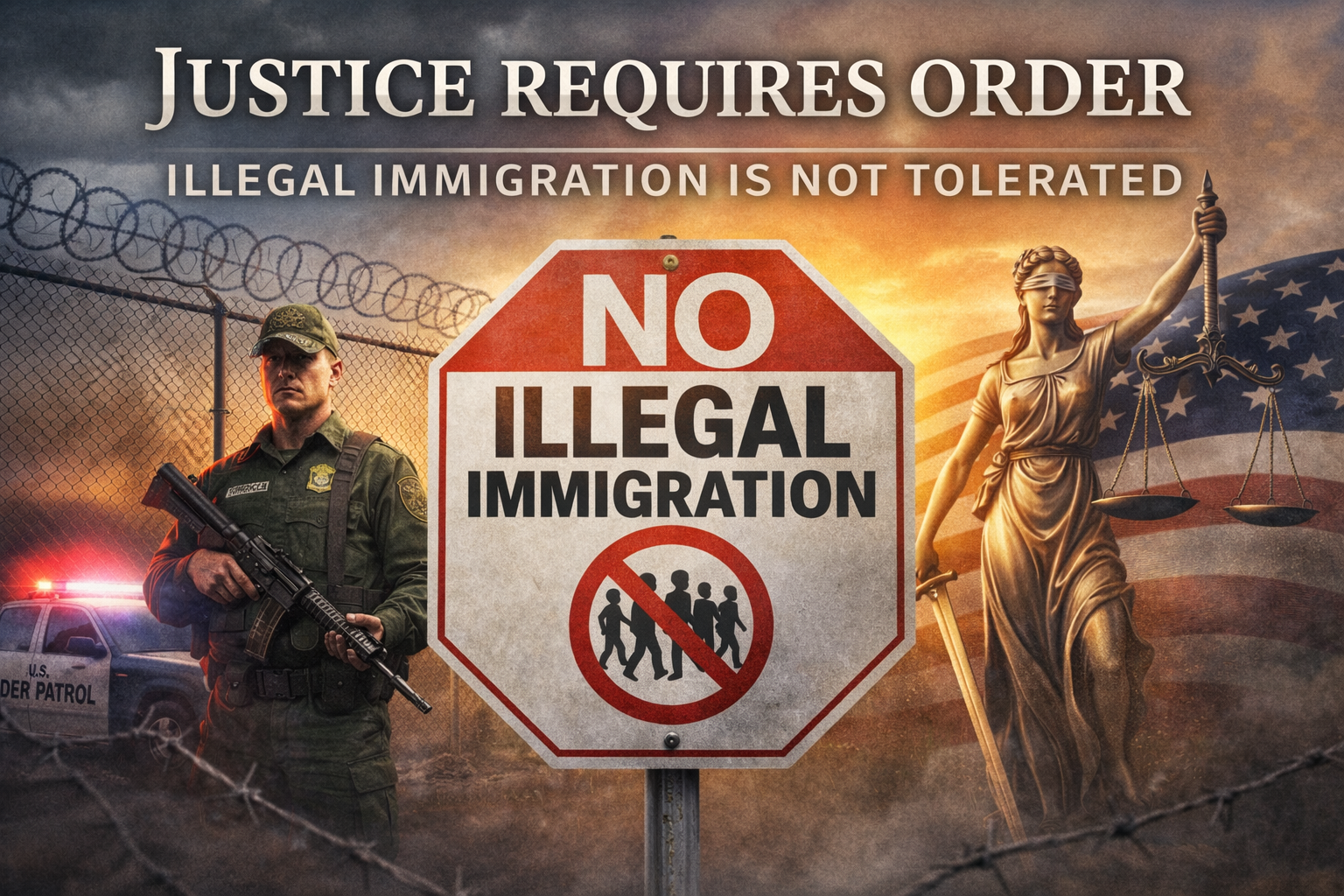
Modern debates about borders, immigration, and national identity are often framed politically. Scripture, however, frames the discussion theologically — in terms of divine order, justice, mercy, and covenant responsibility. The Bible does not speak to passports or federal immigration systems, but it does speak extensively about nations, civil authority, law, and the treatment of strangers.
A biblical framework must hold together two truths that are often separated:
- God established nations and boundaries.
- God commands justice and compassion toward the stranger.
I. God Established Nations and Boundaries
Acts 17:26 “And hath made of one blood all nations of men… and hath determined the times before appointed, and the bounds of their habitation.”
Deuteronomy 32:8 “When the most High divided to the nations their inheritance… he set the bounds of the people…”
After Babel (Genesis 10–11), God divided humanity into nations with distinct lands. Boundaries are not merely political inventions; Scripture presents them as part of God’s providential ordering of the world.
Principle: National distinction and territorial boundaries are not inherently unbiblical.
II. Civil Government Has Authority to Enforce Law
Romans 13:1–4 “The powers that be are ordained of God… he beareth not the sword in vain…”
Civil government:
- Is ordained by God.
- Is authorized to enforce law.
- Exists to restrain evil and preserve order.
A nation maintaining lawful entry systems is consistent with this principle. Scripture does not endorse civil anarchy.
III. Israel Was Not an Open-Border Society
Ancient Israel had:
- Defined tribal land inheritances (Joshua 13–21).
- Protected land boundaries (Deut. 19:14).
- Restrictions concerning certain peoples (Deut. 23:3).
- One law for native-born and sojourner.
Exodus 12:49 “One law shall be to him that is homeborn, and unto the stranger that sojourneth among you.”
The stranger (ger) was welcome — but not lawless. He lived under Israel’s covenant structure.
Biblical pattern: Inclusion with order, not inclusion without structure.
IV. Scripture Commands Compassion Toward the Stranger
Leviticus 19:34 “The stranger that dwelleth with you shall be unto you as one born among you, and thou shalt love him as thyself…”
Deuteronomy 10:19 “Love ye therefore the stranger…”
The Bible forbids:
- Oppression
- Exploitation
- Cruelty
But these commands apply to lawful sojourners within covenant order — not to the abolition of national structure itself.
V. Order, Not Confusion
1 Corinthians 14:33 “For God is not the author of confusion, but of peace…”
2 Thessalonians 3:6 “Withdraw yourselves from every brother that walketh disorderly…”
Scripture consistently affirms lawful order and rejects chaos and lawlessness.
Conclusion of Point Paper
Biblically:
- Nations are ordained.
- Boundaries are acknowledged.
- Civil authority is legitimate.
- Strangers are to be treated justly.
- Lawlessness is not endorsed.
- Ethnic superiority is condemned.
The tension is not “borders vs. no borders.”
The biblical tension is Justice with Mercy and Order with Compassion.
II. Covenant Israel vs. Modern Nation-States
Because your broader theological framework emphasizes covenant continuity, this distinction is crucial.
1. Israel Was a Theocratic Covenant Nation
- Boundaries were covenantal.
- Citizenship involved law and worship.
- Land was tied to Abrahamic promise.
- Identity was covenantal, not merely civil.
2. Modern Nations Are Not Covenant Israel
Modern states:
- Are civil entities, not theocratic covenants.
- Do not possess divine land promises.
- Govern under general providence, not Mosaic law.
Thus:
- Modern border enforcement is civil, not covenantal.
- No modern nation can claim Israel’s unique redemptive role.
This distinction prevents:
- Christian nationalism errors.
- Dispensational confusion about land theology.
- The idea that any modern state is “sacred.”
III. Covenant Theology vs. Dispensational Frameworks on National Boundaries
Given your ongoing research contrasting covenantal and dispensational frameworks, here is a careful comparison.
Covenant Theology Perspective
- Nations are providential, not redemptive.
- The church (ekklesia) is transnational.
- Christ fulfills Israel’s land promise (Heb. 11:10, 16).
- No modern political state is covenant Israel.
Borders are:
- Legitimate civil tools.
- Not redemptive mechanisms.
- Not prophetic fulfillments.
Dispensational Perspective
Often emphasizes:
- Ongoing distinction between Israel and the Church.
- Continued ethnic-national significance of Israel.
- Modern Israel tied to prophecy.
- Geopolitical events seen as eschatological fulfillment.
This framework can lead some to:
- View national Israel’s borders as prophetically sacred.
- Treat modern geopolitical issues as covenantal mandates.
The Key Theological Difference
Covenantal view:
Christ fulfills the promises; the people of God are defined by faith.
Dispensational view:
Ethnic-national distinctions remain central in prophecy.
The immigration question, therefore, becomes either:
- A civil issue (covenantal framework), or
- Potentially a prophetic-national issue (dispensational framework).
Final Synthesis
A balanced biblical position would affirm:
- God ordained nations and boundaries.
- Civil governments may enforce lawful borders.
- Compassion toward lawful strangers is commanded.
- Lawlessness is not endorsed.
- No modern nation is covenant Israel.
- The church is not a geopolitical entity.
Thus the biblical emphasis is:
Ordered justice without cruelty.
Mercy without anarchy.
National distinction without ethnic idolatry.

