

Introduction
The concept of true property ownership—or allodial title—stands in direct opposition to the current system of feudal tenure that characterizes land ownership in the United States. Under the present regime, the state maintains a superior claim to all land, rendering the citizen a mere tenant on his own soil. This arrangement is not an accident of law but a deliberate mechanism for state control, ensuring that the citizen remains perpetually subservient to governmental authorities.
The Reality of Feudal Tenure vs. Allodial Title
In a system of allodial title, an individual holds land in absolute ownership, independent of any superior landlord. There are no feudal duties, no rent, and no acknowledgment of a sovereign’s overarching claim. Historically, this was the mark of a free man; he was the lord of his own estate, protected by the reality that his home was his fortress, beholden to no entity for its continued occupation.
In contrast, the current American system operates on a derivative of fee simple tenure. While the law describes this as “ownership,” the existence of property taxes and the power of eminent domain prove that the state is the true landlord. If you fail to pay the tax—a recurring rent—the state will seize the property. This reveals that your “title” is merely a conditional license to occupy land, provided you fulfill your financial obligations to the state.
The Unconstitutional Nature of Taxation and Assessment
The practice of assessing the value of land based on improvements made to the dwelling is a form of penalizing productivity. By taxing the home, the state discourages the improvement of property and forces the owner to pay for the privilege of his own labor.
From a biblical perspective, this system mirrors the enslavement of the people to Pharaoh. In Genesis 47, we see that when Pharaoh acquired all the land of Egypt, the people were forced to pay a fifth of their produce as a perpetual tax. This effectively transferred the inheritance of the people into the hands of the state. When the state asserts the power to seize land for non-payment of taxes, it claims a sovereignty that belongs to God alone, who is the true owner of the earth (Psalm 24:1).
Why Allodial Title is Unavailable
The reason allodial title is essentially impossible to obtain is that modern governments derive their power and legitimacy from the ability to tax and regulate. The state requires the ability to expropriate property to fund its activities, which include programs and agendas that often stand in opposition to the interests of the heritage population. By abolishing allodial title, the state ensured that the citizenry could never be truly independent.
The legal systems of states like Nevada and Texas once provided narrow pathways to establish allodial title, but these have been systematically closed or rendered ineffective. This is a intentional strategy by political elites to maintain the population in a state of dependency, preventing the development of a truly independent landed class that would be harder to coerce.
The Nabothian Precedent: A Defense of Inheritance
Introduction: The account of Naboth in 1 Kings 21 stands as the ultimate biblical barrier against state tyranny. When Ahab demanded Naboth’s vineyard, he was not merely seeking real estate;
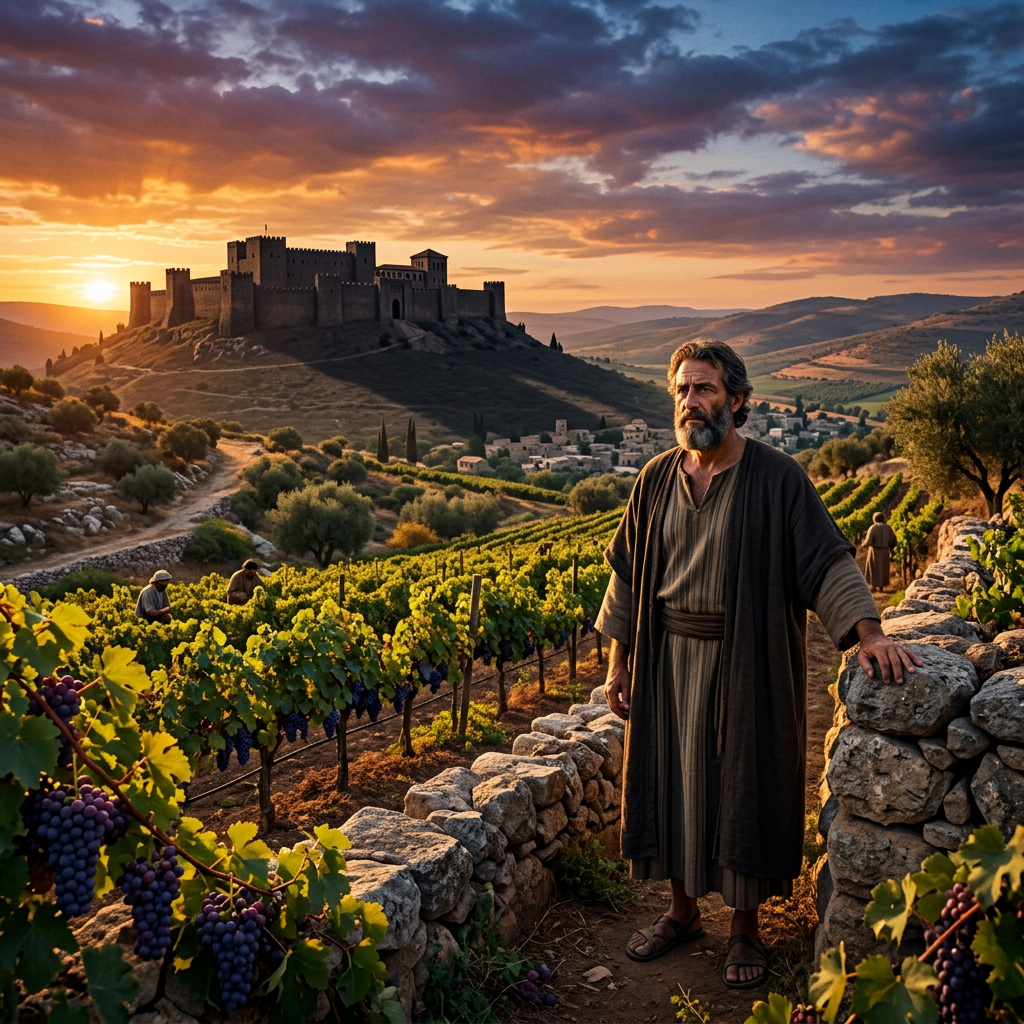
he was attempting to dismantle the God-ordained link between a family and its ancestral inheritance. Naboth—“The Lord forbid it me, that I should give the inheritance of my fathers unto thee”
The Context of the Conflict
The account of Naboth in 1 Kings 21 serves as the definitive biblical typology for the conflict between sovereign family ownership and the predatory nature of a state power that demands total control.
King Ahab desired Naboth’s vineyard, which was adjacent to his palace. Ahab offered to buy the land or trade it for a better one. This is exactly how the modern state operates: it frames land as a commodity and its tax-based “ownership” as a fair transaction. Ahab, like a modern governing body, believed that as King, his will should supersede the traditional rights of the individual.
The Principle of Divine Prohibition
Naboth’s response is the cornerstone of allodial sovereignty: “The Lord forbid it me, that I should give the inheritance of my fathers unto thee” (1 Kings 21:3).
- Inheritance as a Holy Trust: Naboth did not view his land as an asset to be liquidated for convenience or surrendered to authority. He viewed it as a sacred trust from God, handed down through his fathers. To sell it was to abandon his ancestral duty and violate the covenantal connection between his family and the land.
- Rejection of the State’s Supremacy: Ahab’s frustration—he went home “heavy and displeased”—demonstrated that he recognized an authority higher than himself. He could not simply seize the land without violating the laws of Israel.
- The Illegitimate Scheme: When Ahab could not acquire the land legally, Jezebel—the architect of the state’s wickedness—fabricated a “legal” process. She used false witnesses and the veneer of judicial order to have Naboth executed so the state could “legally” confiscate his land.
Application to Modern Land Titles
This story is a stark warning regarding the current state of property rights:
- The Illusion of Negotiation: Just as Ahab offered to “buy” the vineyard, the state pretends you own your home while demanding “taxes.” The moment you accept that the state has the right to tax your land, you have conceded that they are the true landlords.
- The Jezebelian Strategy: The modern state uses “administrative law,” “eminent domain,” and “tax forfeiture” as its Jezebel. These are legalistic tools designed to strip the individual of his inheritance under the guise of the public good.
- The Moral Stance: Naboth was murdered because he held to the principle that his land was not the state’s to take. Today, if you do not pay your property taxes, the state effectively “executes” your claim to the property and reclaims it as state land.
By grounding our defense of property in 1 Kings 21, we recognize that land ownership is not merely a social contract with the government; it is a spiritual responsibility to maintain the inheritance that God has established for our families. To surrender this is to abandon our role as stewards and bow to the authority of the state in the place of God.
Visualizing Property RIghts
Property ownership today is an illusion. Through feudal-style taxation, the state has usurped the role of ultimate landlord, turning your home into a government-controlled asset. The below video player gives the two views presented. The two video visualizations exposes the history of this displacement, contrasting modern land seizure with the scriptural mandate for family inheritance established in 1 Kings 21. Watch to understand the structural trap binding your land to the state and why reclaiming sovereign stewardship is vital for the survival of the Christian family.
Video 1 — Titled: ~ The Myth of Ownership ~

Video 2 — Titled: ~ Naboth A Defense of Inheritance ~
Conclusion
The current system is a structural rejection of the freedom that the American founders sought to secure for their posterity. By replacing allodial ownership with a taxable feudal tenure, the state has turned citizens into subjects. A man who does not own his land outright is not a free man, as his ability to live on his own property is contingent upon his submission to the dictates of the regime. Restoring true property rights requires acknowledging that the state’s claim to the land is illegitimate and that the pursuit of land sovereignty is essential for the survival of the Christian household and the defense of the nation.

