
Introduction
In every generation, Christians face the challenge of distinguishing between what is biblically revealed and what has been religiously assumed. Many sincere believers hold doctrines and observe practices not because they were taught by Christ or His apostles, but because they have been inherited through tradition, repetition, or cultural acceptance. When such beliefs are questioned, the most common defense offered is: “Scripture does not forbid it.”
Yet the early church did not define doctrine by what was merely permitted through silence. Instead, they devoted themselves to what was taught, delivered, and preserved by the apostles. This essay seeks to define what Scripture means by apostolic doctrine, and to examine whether modern teachings such as dispensationalism, a pre-tribulation rapture, and the celebration of Christmas (December 25) belong to that category—or whether they represent later theological and ecclesiastical developments outside apostolic instruction.
1. What Is Apostolic Doctrine?
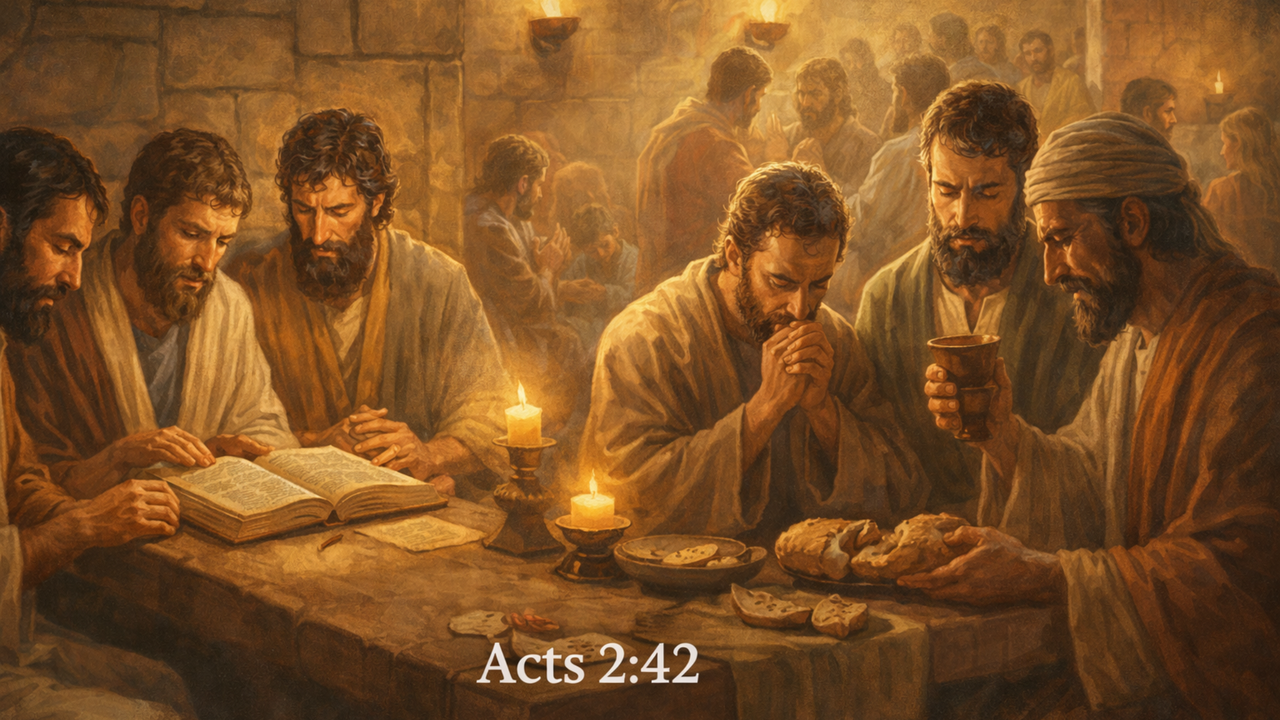
The clearest biblical definition appears immediately after Pentecost:
“And they continued stedfastly in the apostles’ doctrine and fellowship, and in breaking of bread, and in prayers.” (Acts 2:42)
Apostolic doctrine refers to the authoritative teaching of Christ as proclaimed and interpreted by His appointed apostles, under the guidance of the Holy Spirit (John 14:26). It is not an evolving body of ideas, but a received and delivered deposit of truth.
Paul emphasizes this transmission:
“For I have received of the Lord that which also I delivered unto you…” (1 Corinthians 11:23)
And again:
“Therefore, brethren, stand fast, and hold the traditions which ye have been taught, whether by word, or our epistle.” (2 Thessalonians 2:15)
In Scripture, “tradition” is valid only when it is apostolic, not ecclesiastical or cultural. Any teaching claiming Christian authority must therefore answer one question: Was this taught by Christ or His apostles?
2. The Apostolic Standard: What Is Written and Delivered
The apostles consistently warned against adding to the faith under the guise of wisdom or piety.
“That ye might learn in us not to think of men above that which is written.” (1 Corinthians 4:6)
“Beware lest any man spoil you through philosophy and vain deceit, after the tradition of men.” (Colossians 2:8)
Jesus Himself rebuked religious leaders for elevating tradition to the level of doctrine:
“But in vain they do worship me, teaching for doctrines the commandments of men.” (Matthew 15:9)
The apostolic model is therefore positive and declarative, not permissive. Doctrine is defined by what God has revealed, not by what He has not explicitly prohibited.
3. Dispensationalism and Apostolic Teaching
Dispensationalism, developed in the nineteenth century and popularized through the Scofield Reference Bible, presents redemptive history as divided into distinct eras, often emphasizing a sharp separation between Israel and the Church. Within this framework, many of God’s promises to Israel are viewed as postponed to a future age, while the present era functions as a temporary interlude in God’s prophetic plan.
When measured against apostolic teaching, however, this framework encounters significant difficulty. The apostles consistently interpret God’s redemptive purposes as unified and fulfilled in Christ, not deferred or divided. Rather than presenting Christ as a pause in Israel’s story, they proclaim Him as its culmination.
A. One People of God in Christ
A foundational assumption of dispensational theology is that God maintains two distinct covenant peoples—Israel and the Church—each with separate identities and destinies. Apostolic teaching, however, consistently affirms that redemption in Christ results in one unified people of God, not parallel covenant communities.
Paul states this plainly:
“There is neither Jew nor Greek, there is neither bond nor free, there is neither male nor female: for ye are all one in Christ Jesus.” (Galatians 3:28)
This unity is not merely spiritual sentiment; it is covenantal reality. Paul continues:
“And if ye be Christ’s, then are ye Abraham’s seed, and heirs according to the promise.” (Galatians 3:29)
Here, inheritance is determined not by ethnic descent or national identity, but by union with Christ. The apostles do not describe Gentile believers as a secondary people alongside Israel, nor as a temporary body awaiting removal. Rather, they are incorporated into the very promises given to Abraham—promises fulfilled in Christ.
Paul reinforces this truth in Ephesians:
“For he is our peace, who hath made both one, and hath broken down the middle wall of partition between us.” (Ephesians 2:14)
This “middle wall” represents a former distinction that has now been abolished, not postponed. Through Christ’s death:
“Having abolished in his flesh the enmity… for to make in himself of twain one new man.” (Ephesians 2:15)
The “one new man” is not Israel restored alongside the Church, but a new covenant people constituted in Christ Himself. To reintroduce a permanent division after the cross is to rebuild what Christ has destroyed.
B. The Kingdom Already Inaugurated
Another defining feature of dispensational theology is the postponement of the kingdom of God to a future earthly reign. Apostolic teaching, by contrast, presents the kingdom as already inaugurated through Christ’s life, death, resurrection, and exaltation.
Jesus Himself announced:
“The time is fulfilled, and the kingdom of God is at hand.” (Mark 1:15)
Following Christ’s ascension, the apostles did not speak of the kingdom as delayed. Paul declared:
“He hath delivered us from the power of darkness, and hath translated us into the kingdom of his dear Son.” (Colossians 1:13)
Believers are not merely awaiting entry into the kingdom; they have already been transferred into it. This present reality does not deny a future consummation, but it does deny the notion of postponement.
Peter likewise interprets Christ’s resurrection and ascension as the fulfillment of God’s promises to David:
“Therefore being by the right hand of God exalted…” (Acts 2:33)
The kingdom is not described as a suspended political entity awaiting restoration after the church age. It is a present reign, inaugurated from heaven and advancing through the proclamation of the gospel.
C. Promise and Fulfillment in Christ
Underlying dispensational divisions is the assumption that many Old Testament promises await future fulfillment apart from the Church. Apostolic teaching, however, repeatedly affirms that all of God’s promises find their fulfillment in Christ.
Paul writes unequivocally:
“For all the promises of God in him are yea, and in him Amen, unto the glory of God by us.” (2 Corinthians 1:20)
The apostles do not speak of parallel or postponed fulfillments. They proclaim fulfillment as accomplished in Christ and applied to His people.
This understanding shaped the earliest Christian interpretation of Scripture. The apostolic fathers consistently read Israel’s promises through Christ and His body, not through a future ethnic restoration independent of the gospel. The later emergence of dual-covenant frameworks represents a departure from apostolic reasoning rather than its continuation.
The apostolic witness is therefore clear: God’s redemptive plan does not divide humanity into competing covenant categories. It brings Jew and Gentile together into one redeemed people, grounded not in bloodline or national identity, but in faith in the crucified and risen Christ.
“So then they which be of faith are blessed with faithful Abraham.” (Galatians 3:9)
If the apostles understood God’s people as one in Christ, the kingdom as already inaugurated, and the promises as fulfilled in Him, then it naturally raises the question of how later doctrines—particularly those centered on escape from tribulation—fit within apostolic expectation.
4. The Pre-Tribulation Rapture
The modern doctrine of a secret rapture occurring before a future seven-year tribulation is similarly absent from apostolic teaching.
Jesus described His return as:
- Visible (Matthew 24:30)
- Audible (1 Thessalonians 4:16)
- Final (John 6:39–40)
Paul writes:
“We must through much tribulation enter into the kingdom of God.” (Acts 14:22)
The early church expected suffering, not escape. Historically, early Christians endured persecution under Rome with the expectation of resurrection at Christ’s appearing, not removal before tribulation. No record of a pre-tribulation rapture exists prior to the 19th century.
Again, the issue is not that Scripture fails to forbid such a doctrine—but that it fails to teach it at all.
5. Christmas and Apostolic Worship
The apostles never recorded:
- A command to celebrate Christ’s birth
- A date for His birth
- An annual observance commemorating it
What they did establish:
- The Lord’s Supper (1 Corinthians 11:23–26)
- Weekly gathering on the first day (Acts 20:7)
- Prayer, teaching, and fellowship
Paul warned believers about adopting religious calendars as acts of devotion:
“Ye observe days, and months, and times, and years. I am afraid of you.” (Galatians 4:10–11)
Historically, December 25 was not observed by the early church and emerged centuries later within the Roman ecclesiastical system. Its adoption coincided with existing pagan festivals, illustrating how tradition can gradually replace apostolic simplicity.
6. The Fallacy of “Not Forbidden”
The argument that a practice is acceptable because Scripture does not forbid it would have justified every error Jesus confronted.
The apostles did not ask:
“Is this allowed?”
They asked:
“Did we receive this from the Lord?”
“If any man think himself to be a prophet, or spiritual, let him acknowledge that the things that I write unto you are the commandments of the Lord.” (1 Corinthians 14:37)
Silence in Scripture does not grant authority. Only revelation does.
Conclusion
Apostolic doctrine is not defined by tradition, popularity, or sincerity, but by what Christ revealed and the apostles faithfully delivered. When measured by that standard, doctrines such as dispensationalism, a pre-tribulation rapture, and the celebration of Christmas fall outside apostolic teaching—not because they are explicitly forbidden, but because they are entirely absent and often contradicted by Scripture.
The early church devoted itself to what had been received, not what had been added. In an age saturated with inherited assumptions, the call remains the same:
“Prove all things; hold fast that which is good.” (1 Thessalonians 5:21)
Faithfulness to Christ is not found in preserving tradition, but in returning to the doctrine once delivered to the saints.

