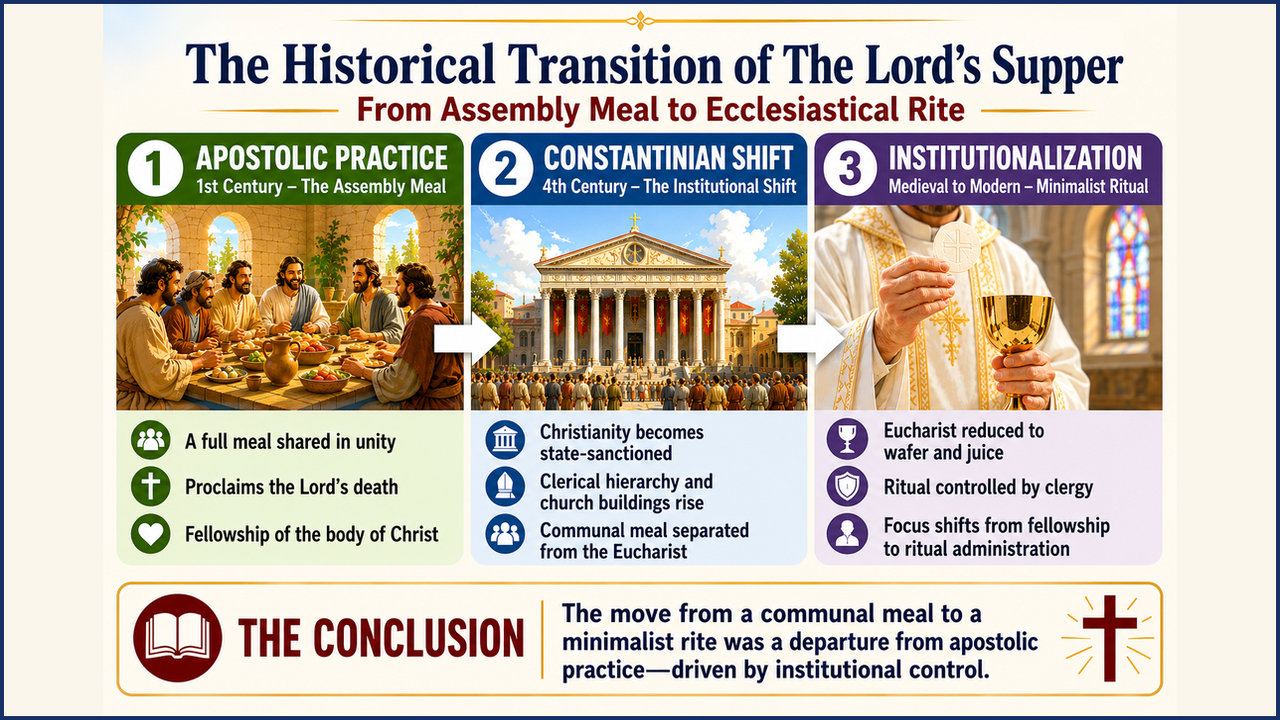
The practice of coming together to break bread is one of the most powerful and meaningful expressions of the Christian faith. Often, the modern observance of the Lord’s Supper feels like a quiet formality, a small ritual performed from a distance. However, a deeper look into the history of the early church reveals that this meal was originally the heartbeat of the assembly—a vibrant, full feast where believers shared not only bread and wine but their lives, their burdens, and their unity in Christ.
There is deep beauty in rediscovering the simplicity of the early apostolic practice. When we look back at the original meaning of these gatherings, we find a call to something much warmer and more connected than a modern, detached ordinance. It is an invitation to move beyond the formality of rows and rituals and to embrace the table as a place of true belonging, where our identity as a body is lived out in tangible, practical, and sacrificial love for one another.
This resource explores the historical journey of this meal, offering a path for those seeking to reconnect with that original, communal spirit. It is designed to spark meaningful conversation, challenge traditional habits that may have drifted from the biblical pattern, and encourage a return to the table where we are reminded that we are not just observers of a rite, but a family called to walk together in His grace.
Approaching these writings with an open mind is essential, recognizing that the only final authority is the Word of God. With that foundation established, the following perspectives outline the nature and function of Christ’s supper as implemented .
Return to the Study Overview