Before diving into the background of ekklesia as discussed in the title, Ekklesia Defined – A Closer Look, it is important to take a step back and examine the nature of this Greek word. An analysis must determine if there is any legitimate etymological or semantic connection1 between this original term and the modern English word “church.”
Most students of the Bible assume an understanding of the English word “church,” often defining it through the lens of traditional teaching or societal norms. Many treat it as a simple, self-evident religious term, never questioning its origin or depth. However, a different reality emerges when one moves past such assumptions to observe what the word actually signifies.
In this section, a deep examination of the Greek word ekklesia is studied. While the English New Testament repeatedly uses the word “church” as a translation for ekklesia, the two terms possess no etymological or semantic link. Discovering why this equate was made is an exercise in uncovering how believers have been led to interpret the Scriptures through a framework the Apostles did not share. Becoming aware of this translational shift—which began in earnest during the 4th century—often serves as a profound eye-opener for those who have long trusted received tradition.
To truly understand the source and intent of the word “church,” one must return to the original Greek text. Therefore, this section presents as a series of “Perspectives.” These writings need not be consumed in any specific order; rather, each pointed perspective presented is compiled to provide individual pieces of a larger picture, drawn from historical accounts and biblical evidence. The design of these perspectives is to encourage critical thinking, allowing for an independent assessment of whether past understanding was rooted in mere institutional tradition or in biblical accuracy.
This study examines the historical and linguistic transformation of the term ekklesia, tracing its corruption from a called-out assembly of believers into an instrument of imperial ecclesiastical power. The investigation begins by establishing the biblical and linguistic foundation of ekklesia as Christ’s assembly, set apart from its secular Greek civic usage and later institutional subversion. A detailed translational analysis documents the deliberate shift from Tyndale’s rendering of “assembly” to the imposed word “church,” severing the term from its apostolic meaning. This historical subversion of New Testament Greek vocabulary, engineered through Roman Catholic institutional control during the 16th and 17th centuries, fundamentally altered the understanding of the assembly. Furthermore, this study addresses the contemporary implications of these theological shifts, recognizing that certainty often silences necessary dialogue, and affirming the biblical pursuit of truth over institutional tradition in matters of doctrine and practice.
Approaching these writings with an open mind is essential, recognizing that the only final authority is the Word of God. With that foundation established, the following perspectives outline the nature and function of Christ’s assembly.
Return to the Study OverviewTable of Contents
🔎 Click Image to Enlarge
-
 →
→Perspective 1
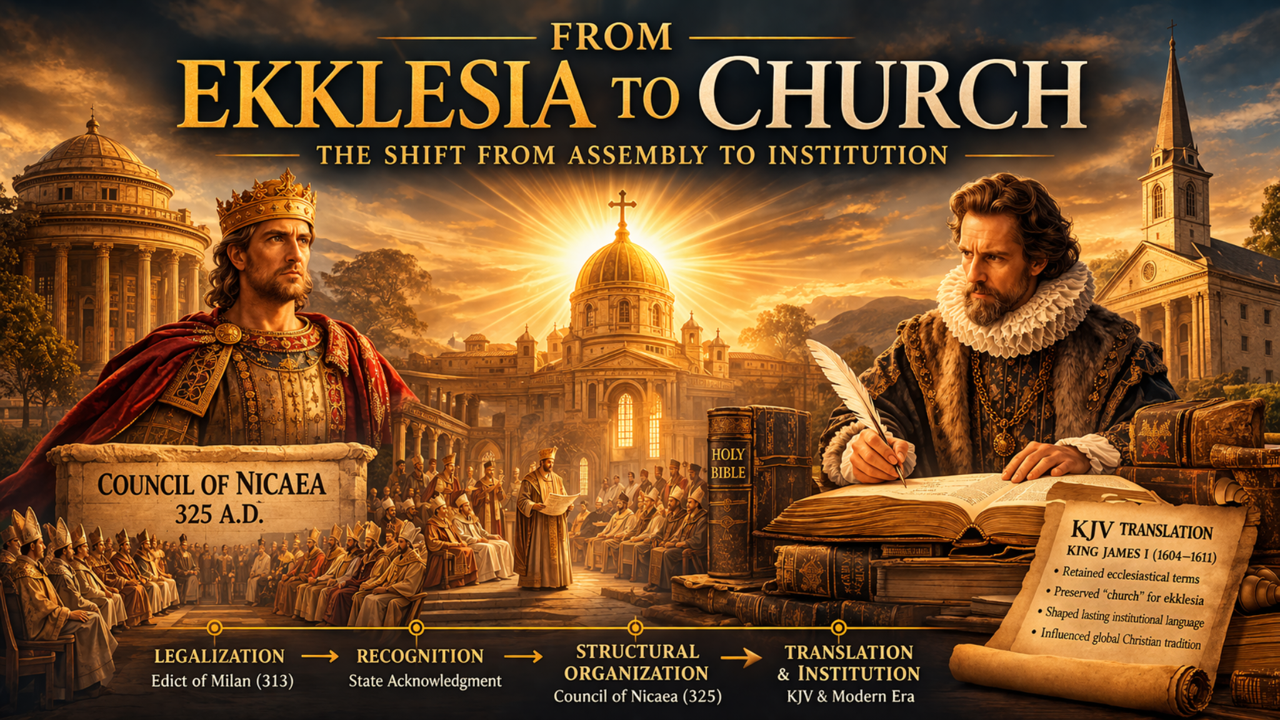
The Political & Structural Shift of Ekklesia Under Constantine
How the 4th-century Constantinian shift transformed the meaning of ekklesia from a called-out assembly into an instrument of imperial ecclesiastical power.
-
 →
→Perspective 2
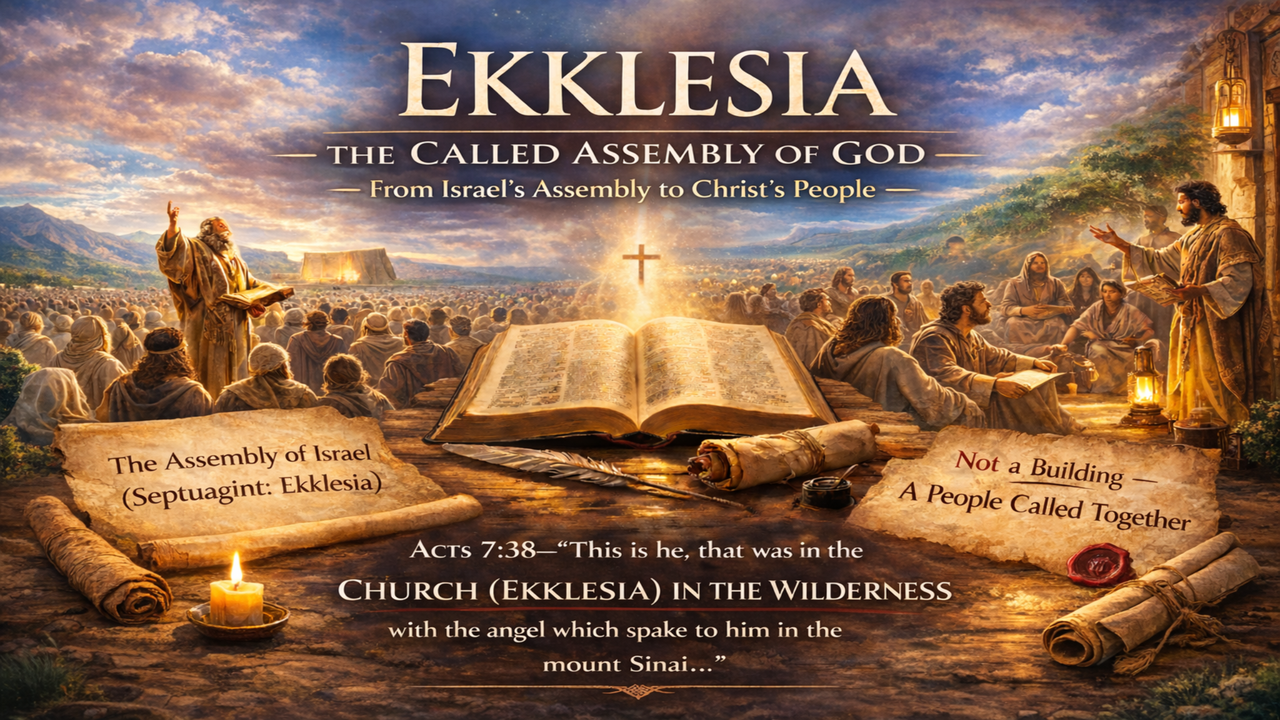
The Called Out of God
Establishing the biblical and linguistic foundation of ekklesia as Christ’s assembly, set apart from its secular Greek civic usage and later institutional corruption.
-
 →
→Perspective 3
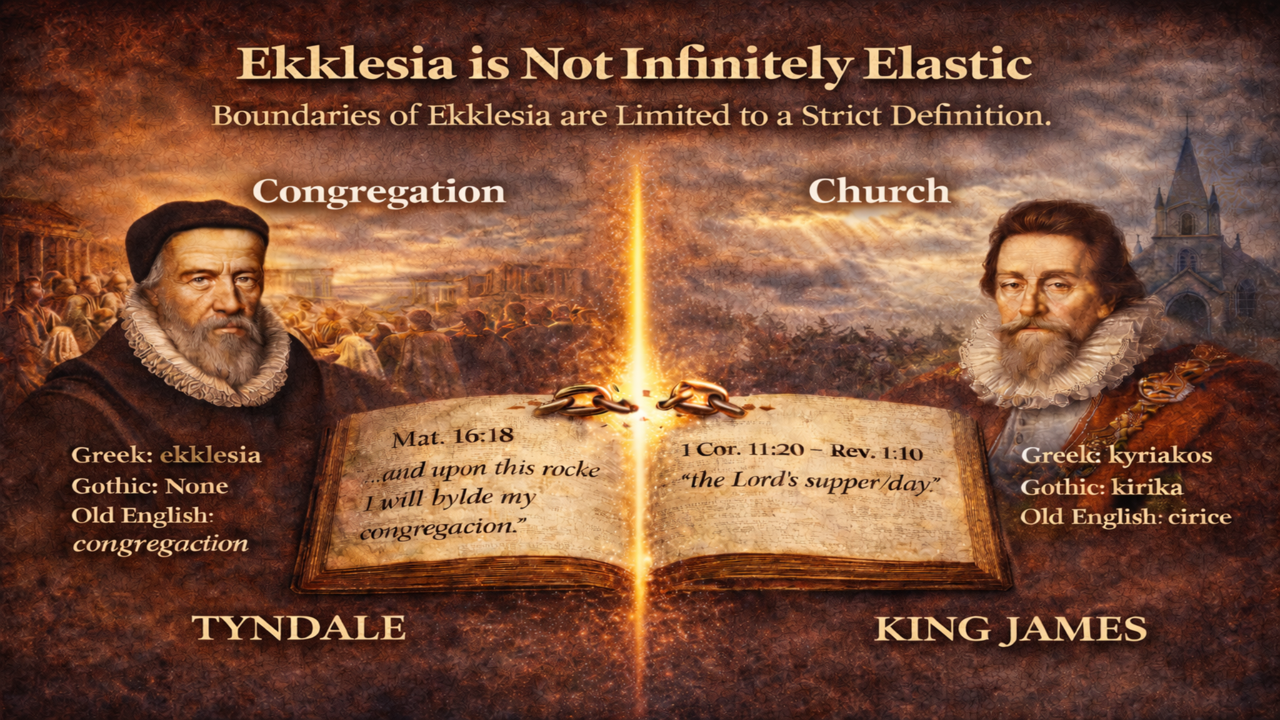
A Linguistic & Translational Examination: Assembly to Church
Tracing the translation history from Tyndale’s “assembly” to the imposed rendering “church,” and how this shift severed the word from its apostolic meaning.
-
 →
→Perspective 4
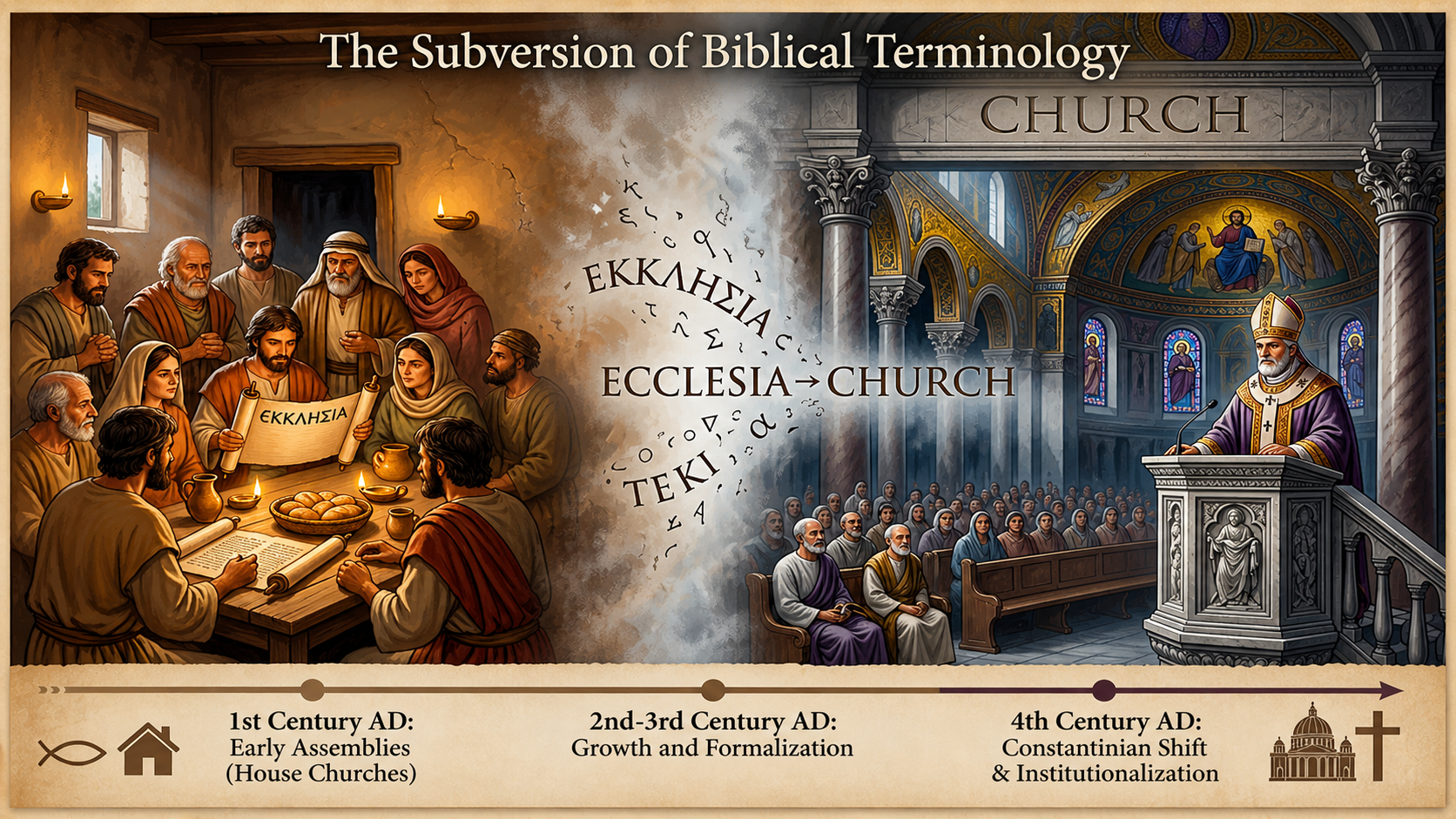
The Linguistic & Historical Subversion of Biblical Terminology
Documenting the deliberate redefinition of New Testament Greek vocabulary through Roman Catholic institutional control during the 16th and 17th centuries.
-
 →
→Perspective 5
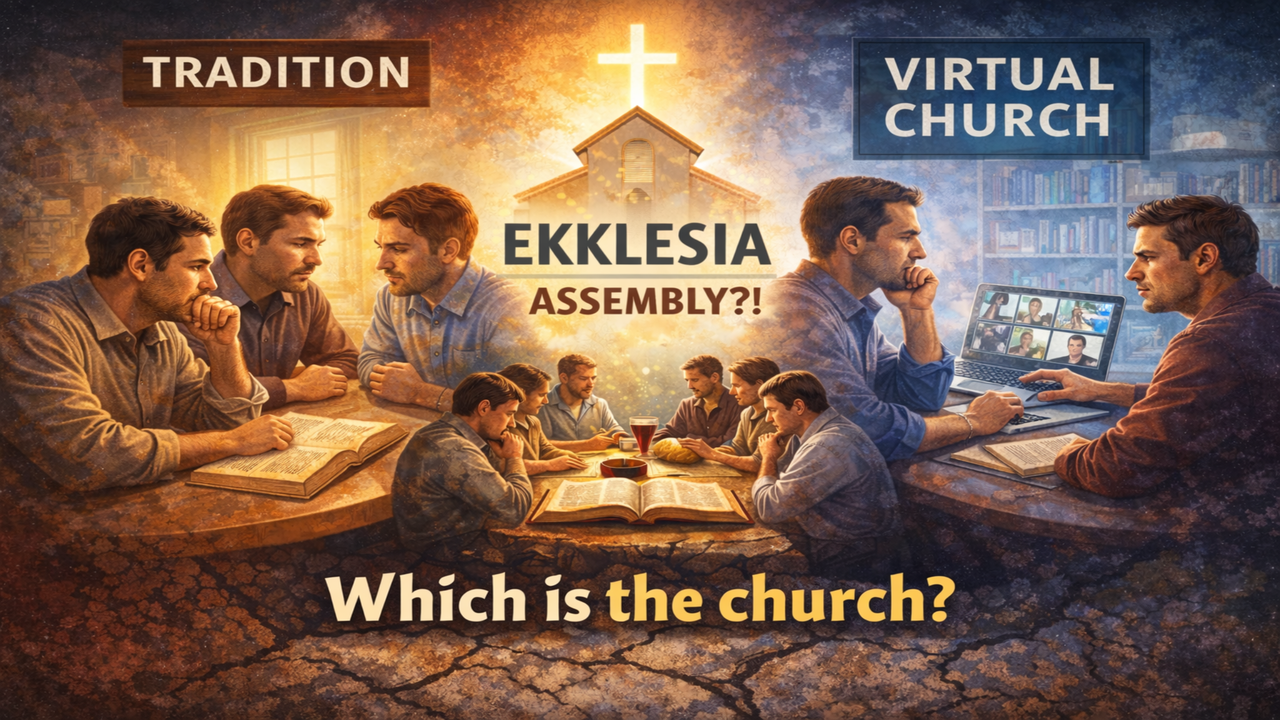
Pride, Listening, & Biblical Pursuit of Truth: Certainty Silences Dialogue
Disagreements among Christians are not new. From the earliest days of the faith, believers wrestled with questions of doctrine and practice.
-
 →
→Perspective 6
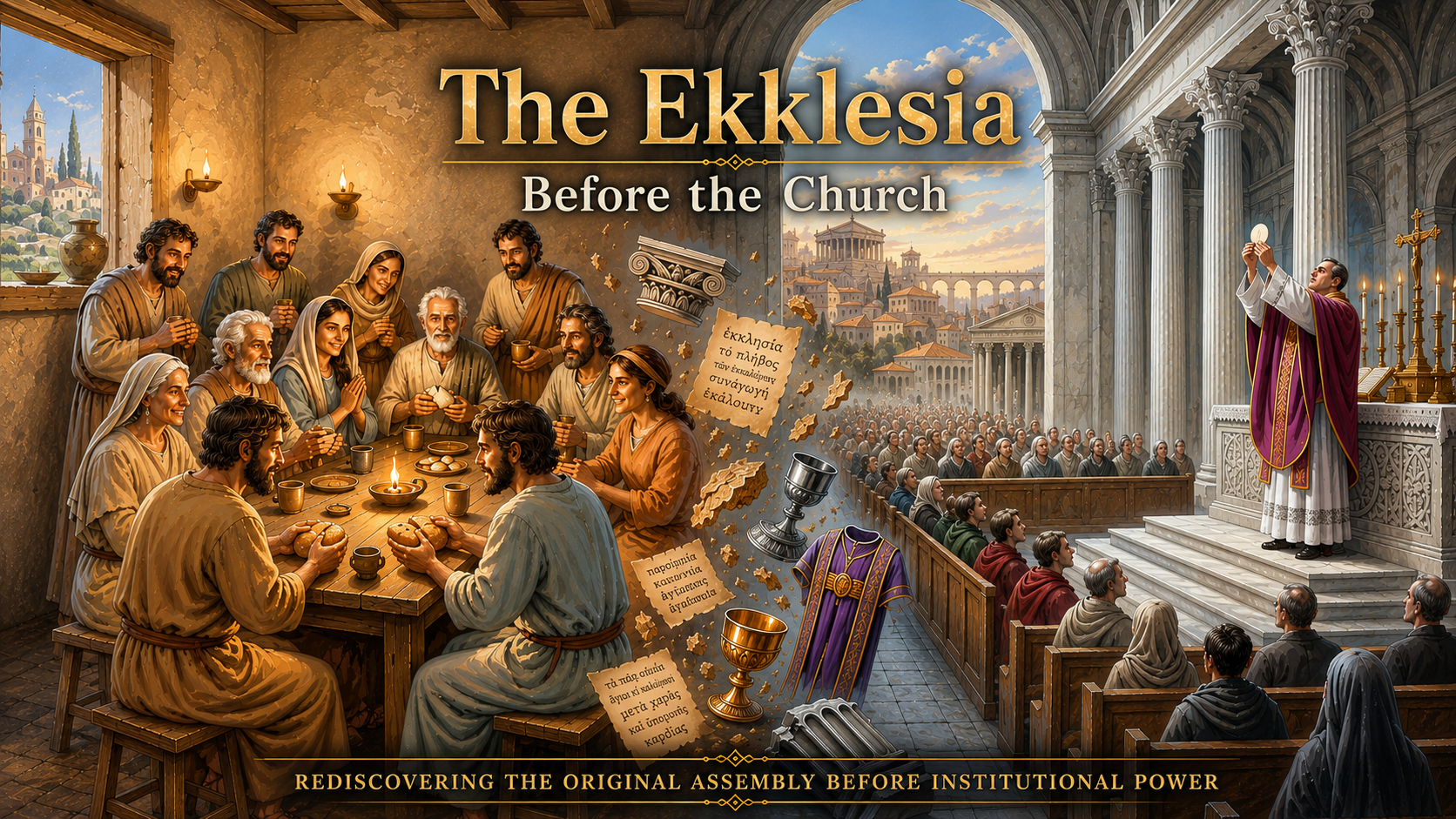
Institutional Subversion of the Apostolic Ekklesia
The historical trajectory of the Christian faith from the 4th century to the modern era.
Notes: